

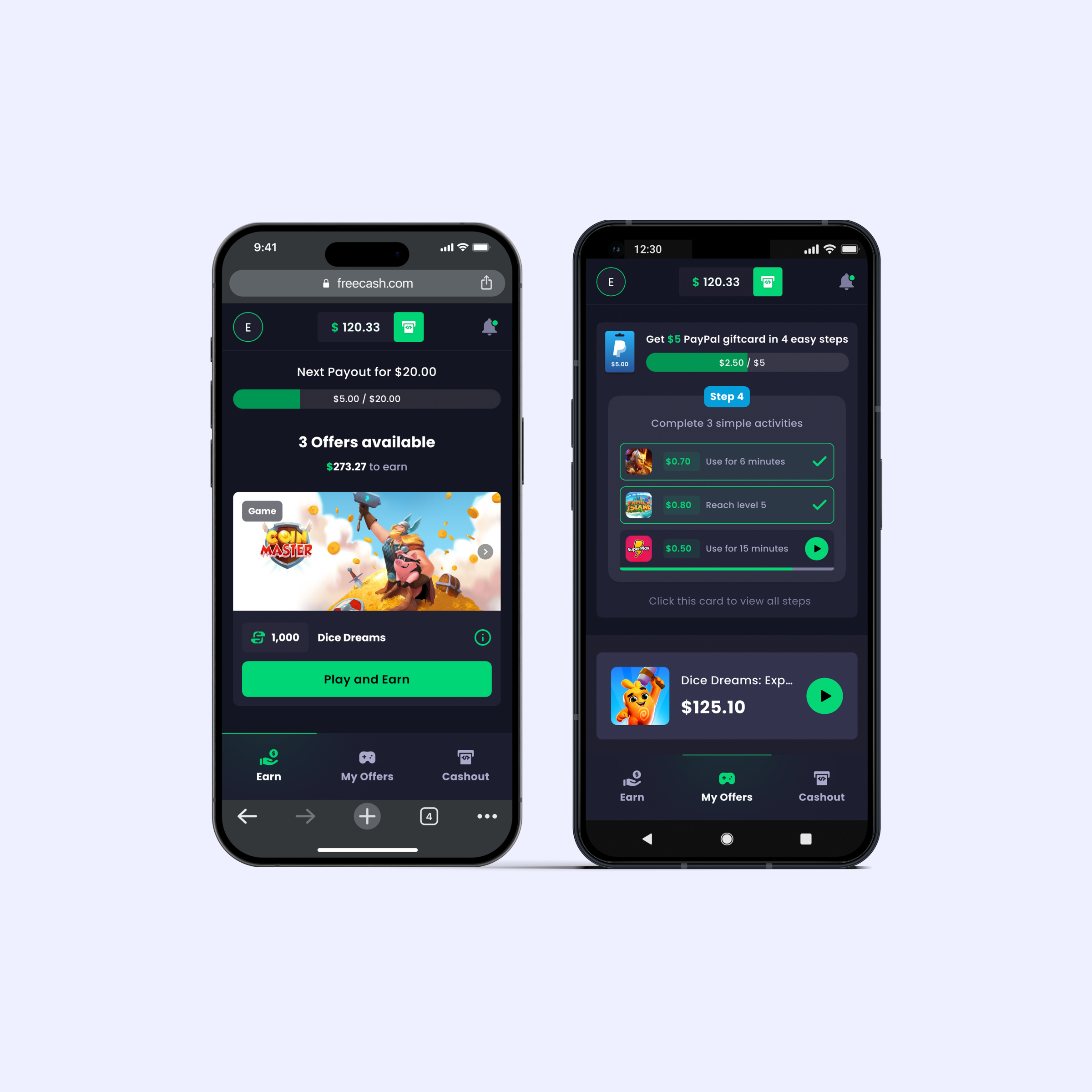
UX/UI Design
Scaling User Acquisition That Actually Converts
Designing Freecash—powering reward-based acquisition that outperforms for 82% of game
TL;DR
User acquisition has evolved from simple download hacks to data-driven, reward-based systems that deliver real value to users and better results for businesses (82% outperform, 95% gain advantage).
Freecash (by Almedia) sits at the center of this shift—connecting game developers with users who earn rewards for engaging with apps.
As a Senior Product Designer, I improved the platform’s conversion, retention, engagement, and revenue, helping it scale as a high-performing growth engine for both users and partners.


How User Acquisition Has Evolved
In the early days of the App Store, growth was simple—more downloads meant higher rankings. Developers often used incentivized traffic to quickly climb the charts.
Over time, things changed. Privacy updates (like IDFA restrictions), market shifts, and increased competition forced developers to adopt more sustainable growth strategies.
Today, user acquisition is far more advanced. Instead of basic incentives, companies now use transparent, data-driven systems with meaningful rewards that create real value for users.
This is where reward-based user acquisition comes in—and why it has become so effective:
- 82% of developers say it outperforms other UA channels
- 95% say it gives them a competitive advantage
Freecash, Almedia’s flagship product, is a platform built around this new model of user acquisition.
It connects:
- Game developers looking to acquire high-quality users
- Everyday users who earn rewards by completing tasks like playing games or trying apps
This creates a win-win system—developers get engaged users, and users get real value in return.
My Role
As a Senior Product Designer, I worked on improving Freecash as a growth engine for both users and businesses. My focus was on:
- Increasing conversion rates
- Improving retention and engagement
- Driving in-app purchases
- Supporting overall product growth
My work helped shape how users discover, engage with, and return to the platform—while ensuring the system delivers value at scale for partners.
My Everyday Process
Working on a product with 50M+ users, my focus was on making decisions based on real data and continuous testing.
- I ran large-scale A/B tests to understand what actually works
- Since there are only a few direct competitors (like rewards apps), I also drew inspiration from everyday apps users already know
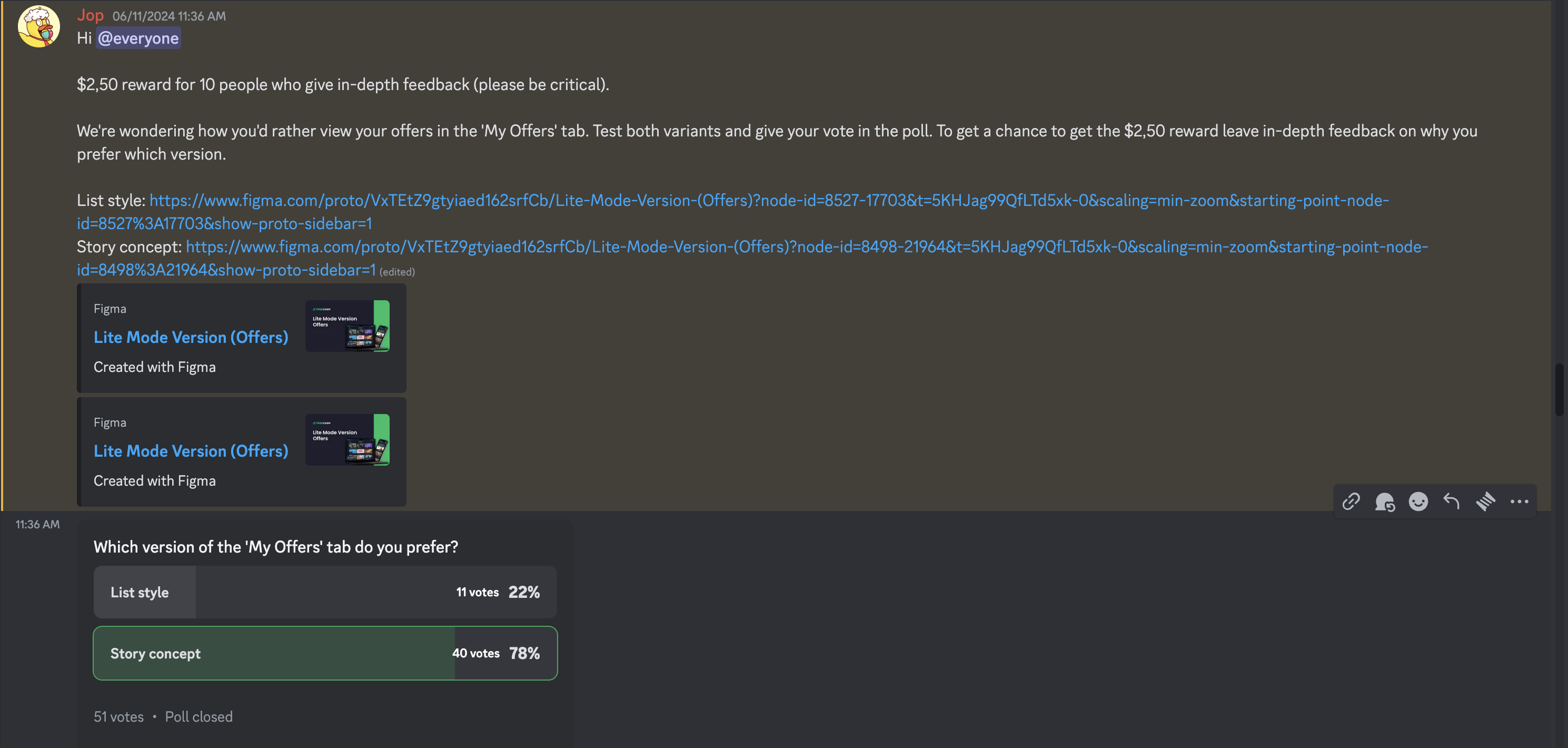
- For quick ideas, I tested wireframes and prototypes with a small group of beta users on Discord
- I used Amplitude dashboards to release different versions to user groups, track performance, and measure results
An image of a small test from the discord channel
Some Experiments I Led & Their Outcomes
Click to scroll to the section
Improving Offer Selection for New Users
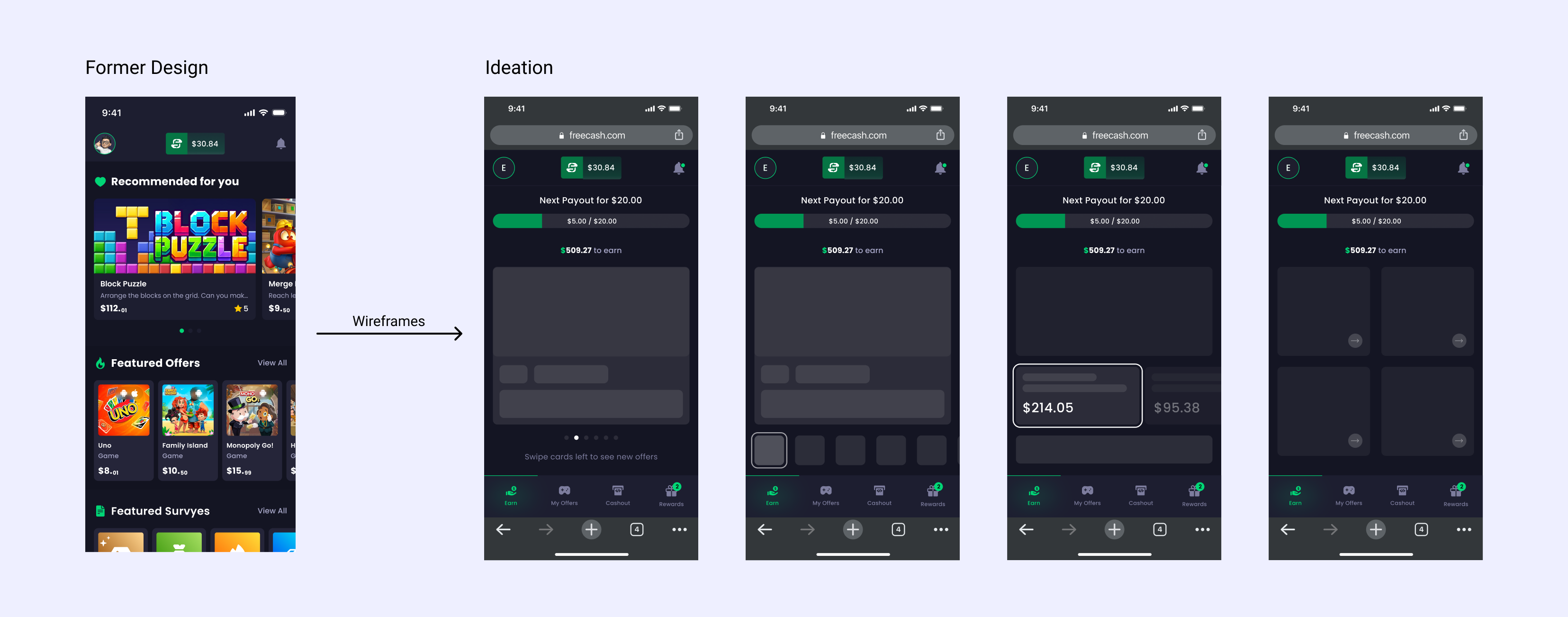
Problem
New users were shown too many offers at once. While this gave variety, it often led to confusion, slower decisions, and lower engagement.
Approach
I tested simpler, more guided experiences that helped users get started faster and understand how the product works before seeing everything.
Results
We measured success using - Activation rate (users starting an offer)
and Retention rate (users coming back and staying active)
The winning approach was progressive discovery:
- Start with 1 highly relevant offer based on user data
- Gradually increase options (1 → 3 → 5 → full access) as users return
Outcome:
A simpler, guided experience led to higher activation and better retention.
It showed that while users like having many options, starting simple helps them take action faster and stay engaged longer.
Delight - Feel Good Factor
70% of users report that animated, motion‑based interfaces make apps feel more enjoyable and engaging compared to static designs. (source: Moldstud)
Animations and micro‑interactions help users feel good and understood while using an app. They:
- Make the interface feel alive and responsive
- Give clear feedback when users take action
- Reduce confusion and frustration
- Make waiting feel shorter
- Encourage users to keep coming back
This improves both engagement (how much users interact) and retention (how often they return).