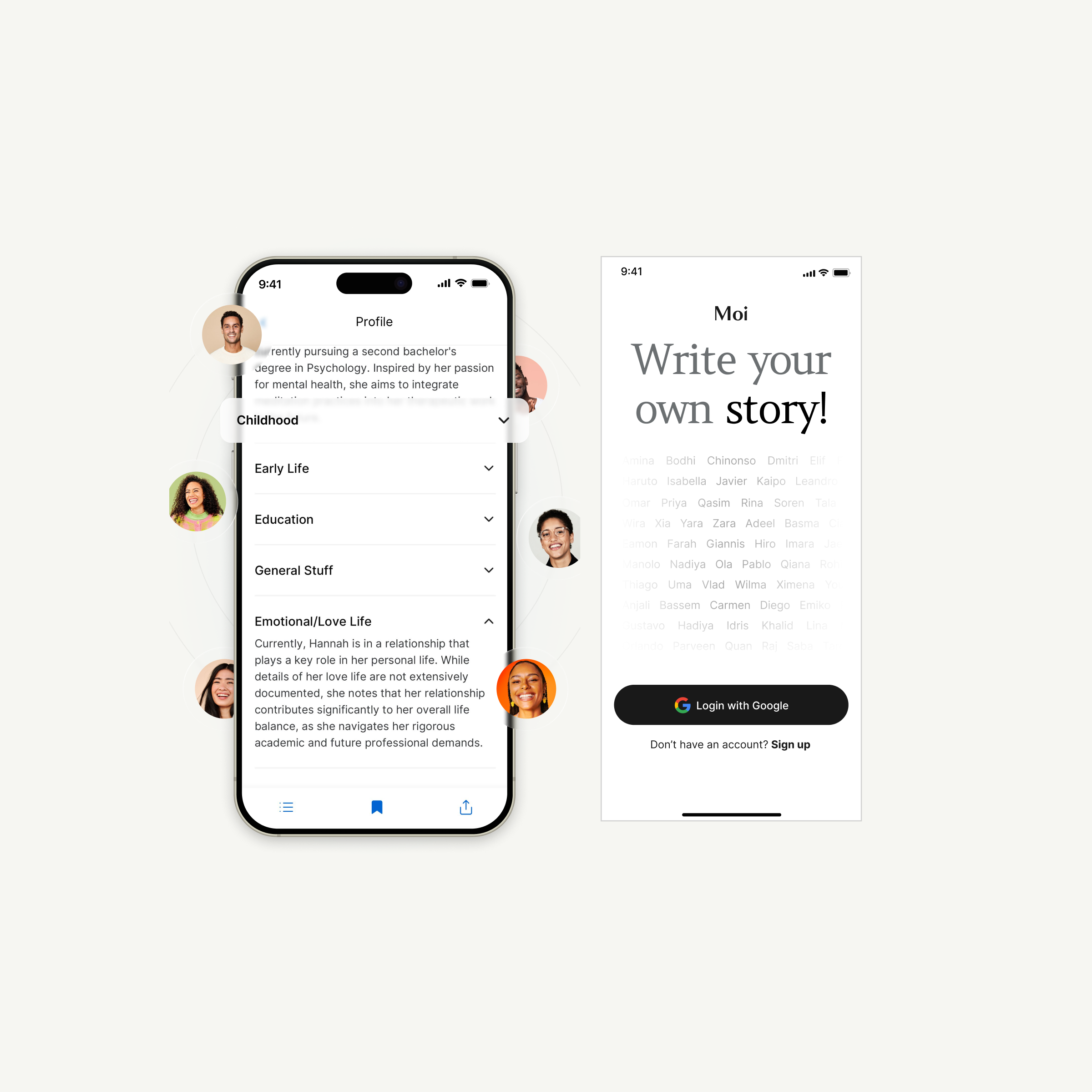
WikiMoi is an AI product that creates a digital twin of you. It scrapes the internet for public information about you, then asks a few onboarding questions to fill in the gaps. The result is a Wikipedia-style page — the database that powers your twin. Anyone can chat with that twin, and it responds the way you would.
Breaking the ice. Adam has a crush on Cynthia but is too shy to talk to her. He chats with her digital twin instead, to get a feel for who she is before ever approaching her.
Dating, without the wasted evening. On a dating app, two people's twins could go on a "first date" and report back — so people don't waste time meeting up if their values don't align.
Meeting your idol. Fans can chat with a celebrity's digital twin for a taste of the real thing — always available, at scale.
My Role
Founding designer and part of the frontend engineering team. I validate ideas, design simple usable user flows, design the screens, and build them for iOS, Android, and web.
The Design Challenge
WikiMoi asks people to hand over a lot of personal information and trust it'll be represented well. So the real design problem wasn't just "onboard people quickly" — it was making people feel accurately represented and in control, fast, without it feeling invasive.
A core design principle throughout was reassurance.
Because the product was surfacing personal information — some of it scraped without the user typing a word — every step needed to make clear that the data was proprietary to them, not just harvested and repurposed.
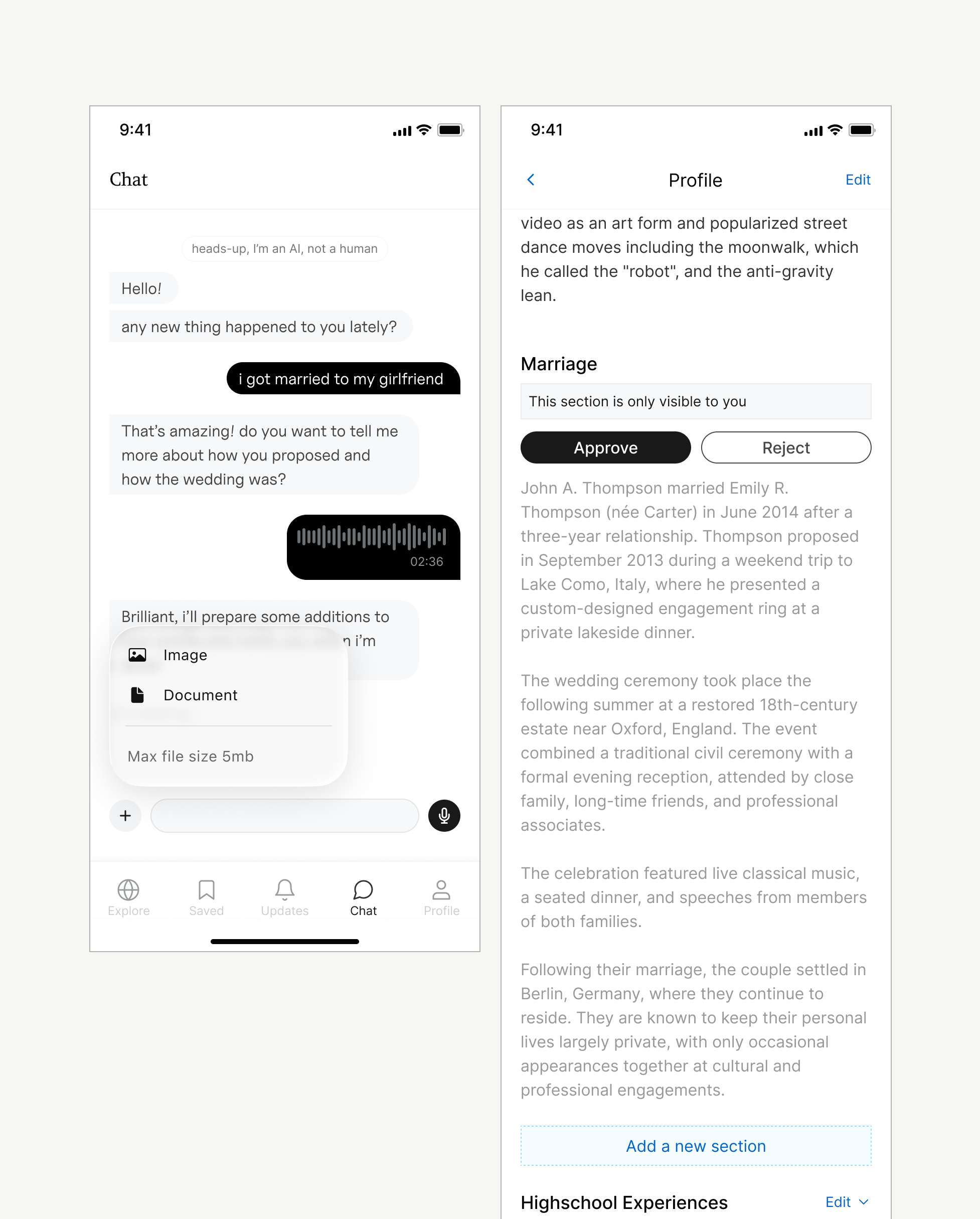
So rather than presenting the wiki page as a finished product, we built in explicit checkpoints: users approved what was written about them at each stage, confirming they were comfortable before anything moved forward.
Chat interface and Confirmation
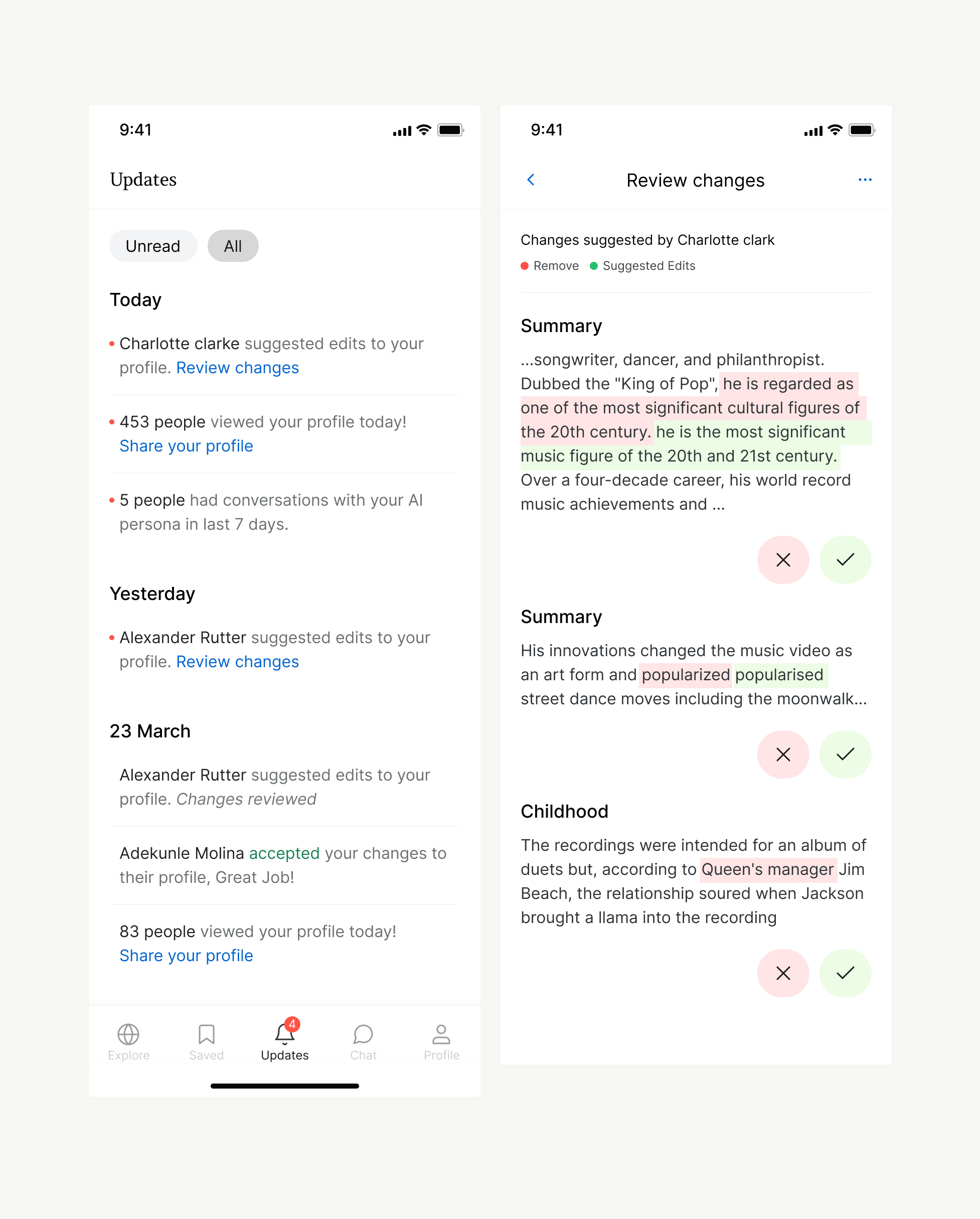
Suggested Changes Flow
Beyond individual approvals, the product also opens the page up to collaborative input — friends and family who know the person can suggest changes or additions to their profile, the same way a Wikipedia page might be edited by people close to the subject.
But control still sits entirely with the user: every suggestion is just that, a suggestion.
The user decides whether to accept it, tweak it, or ignore it — nothing is added to their digital twin's database, their wiki page, without their say-so.
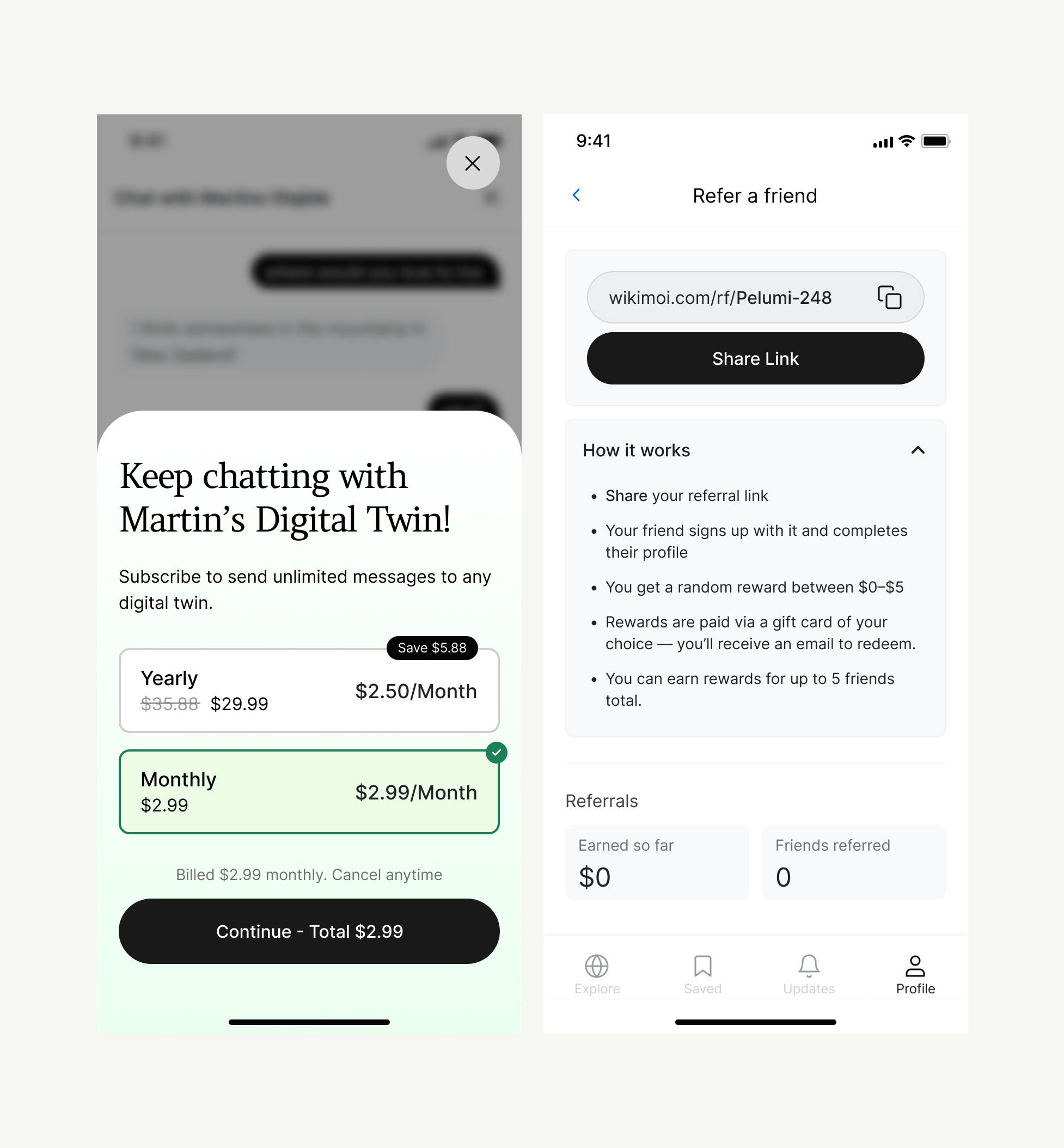
The economic model was built around two mechanics.
The first was straightforward: users purchase tokens, which they spend to chat with other people's digital twins. That's the core monetization engine.
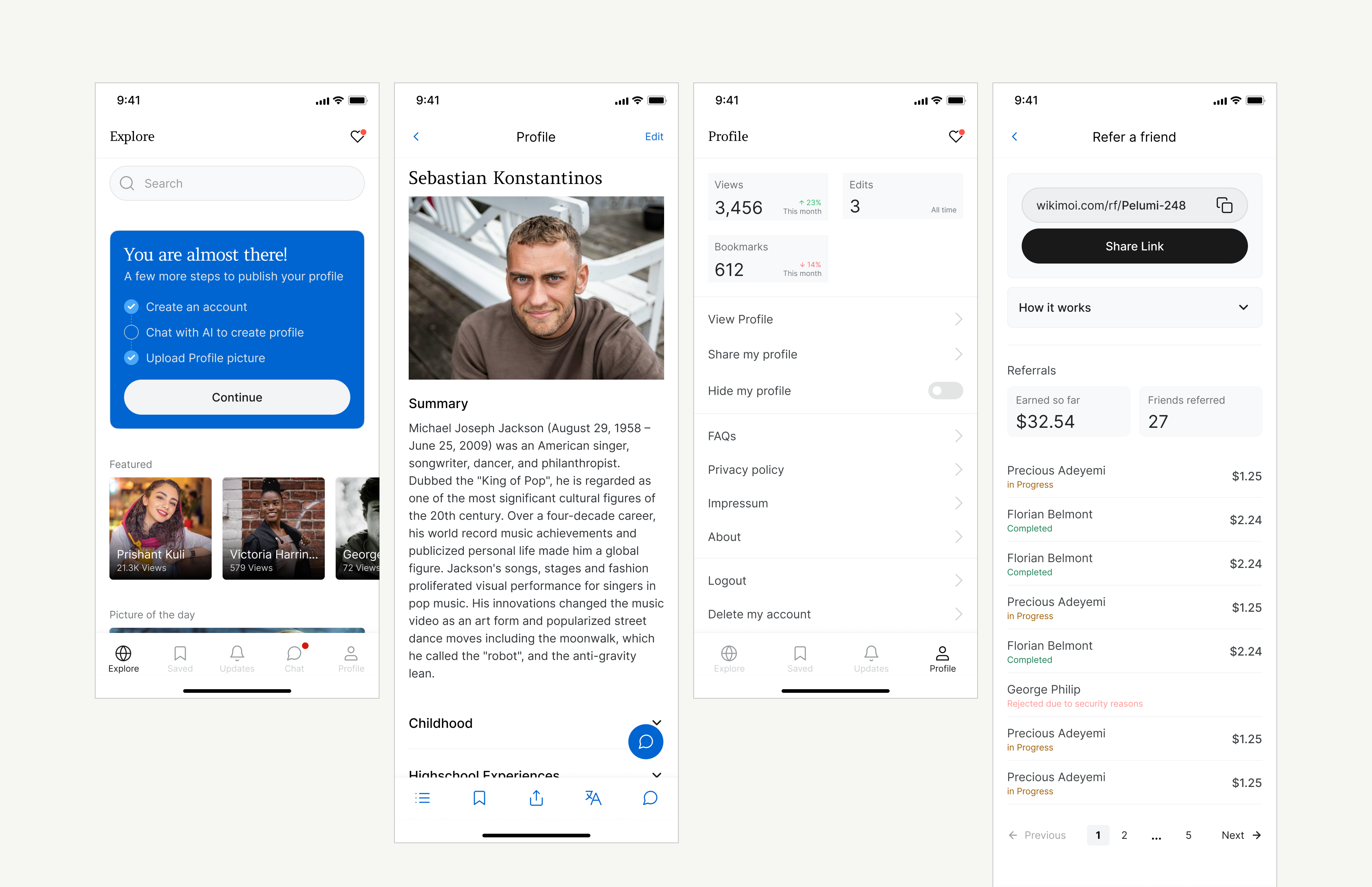
The second was designed to drive growth — a refer-a-friend program that shares revenue with users. When someone invites a friend, and other people later spend tokens chatting with that friend's digital twin, the referrer earns a share of that spend.
So growth wasn't just incentivized with a one-time referral bonus — it created an ongoing incentive to bring people onto the platform, since a bigger network of connections meant more potential earnings over time.
Monetization Mechanics
Still Ongoing...
WikiMoi is an ongoing project, not a finished product. We're continually learning from real user behavior — what resonates, what causes hesitation, what feels invasive — and feeding that directly into new features and refinements. Every interaction shapes the next iteration, and that loop of building, observing, and improving is what's driving the product forward.